Main Line (3...Nf6)
1.e4 e5 2.Nf3 Nc6 3.c3 3...Nf6 4.d4 Nxe4
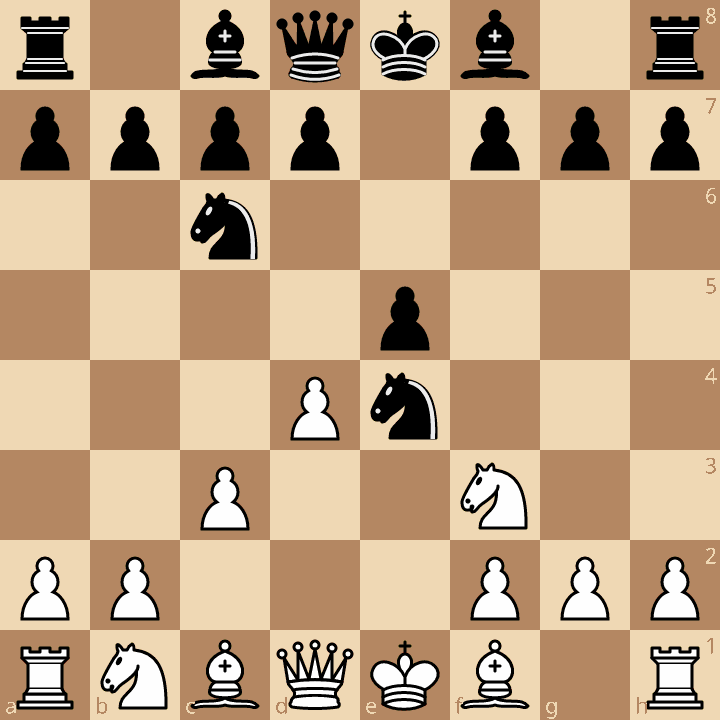
Black grabs the e4 pawn. After 5.d5 Ne7 (Ne5 is also playable) 6.Nxe5, White has active piece play for the pawn.
The surprise weapon. Prepare d4 and catch Black off-guard.
1.e4 e5 2.Nf3 Nc6 3.c3
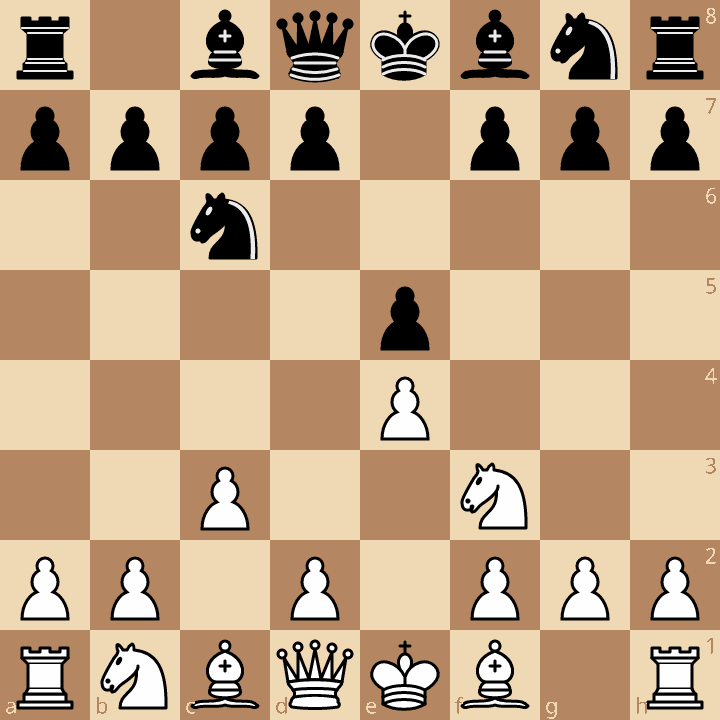
The Ponziani Opening (1.e4 e5 2.Nf3 Nc6 3.c3) prepares d4 immediately without the Italian's Bc4 or the Scotch's direct d4. Named after 18th-century Italian master Domenico Lorenzo Ponziani, it's been overshadowed by the Italian and Scotch for centuries. But that's exactly why it works at club level, most opponents have no preparation. After 3...Nf6 4.d4, White gets an open center and active development. A great surprise weapon for White players who want to sidestep mainline theory.
Each variation below comes with a diagram and the main plan. Click "Train this opening" to drill every line with spaced repetition.
Want to drill the Ponziani Opening from memory? Practice your openings move by move in the free opening trainer, then come back to the variations you missed.
1.e4 e5 2.Nf3 Nc6 3.c3 3...Nf6 4.d4 Nxe4
Black grabs the e4 pawn. After 5.d5 Ne7 (Ne5 is also playable) 6.Nxe5, White has active piece play for the pawn.
1.e4 e5 2.Nf3 Nc6 3.c3 3...d5
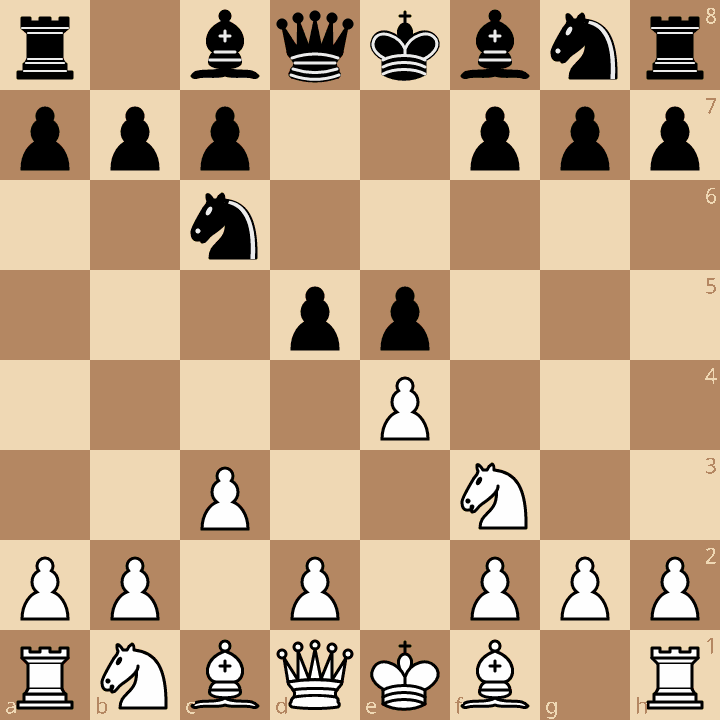
Black's main equalizing try, striking the center at once. After 4.Qa4 dxe4 5.Nxe5 Qd5 6.Nxc6 Qxc6 7.Qxc6+ bxc6, a balanced endgame arises. (3...Nf6 is the Jaenisch Counter-Attack; the sharper Ponziani Counter-Gambit is 3...f5.)
The Ponziani is an excellent surprise weapon at club level. Study the main 3...Nf6 4.d4 line and you'll win many games on preparation alone.
Add the sharp 3...d5 lines. The tactical play rewards calculation skills.
Use the Ponziani as a rapid/blitz weapon. In classical games, prefer the Italian Game or Ruy Lopez for deeper strategic battles.
At club level: surprisingly strong. At the top level: rarely played because theory favors Black slightly. As a surprise weapon, it scores well because most opponents have no preparation.
3...Nf6 (main line) or 3...d5 (Counter-Gambit) are both good. 3...d5 is the most ambitious, immediately challenging White's center. Avoid 3...Bc5 which allows a quick d4 with tempo.
The Italian Game plays 3.Bc4 (developing the bishop first). The Ponziani plays 3.c3 (preparing d4 directly). Both want a big center with d4, but the Ponziani is more committal and rarer.
Rarely at the top level. At club level it's a favorite of surprise-weapon players who want to avoid mainline theory. Low theory load, high practical value.
Yes, it's one of the easiest openings to learn for White. Simple plans (c3, d4, develop pieces), few forcing lines, and most opponents won't know what to do.
The fastest-developing 1.e4 opening. Aim the bishop at f7 and play for the attack.
The center-breaking alternative to the Italian. Kasparov's weapon against Karpov.
The king of 1.e4 openings. Deep theory, long-term pressure, grandmaster-tested.
Every variation above is a drill on ChessAtlas. Spaced repetition schedules each move so you never forget a line again. Free to start, no credit card.