Para Negras· ECO C57· avanzado

Contraataque Traxler

La respuesta más afilada de las negras a 4.Cg5: dejar que tomen en f7 y golpear en f2. Forzada, arriesgada y solo buena si conoces las líneas.

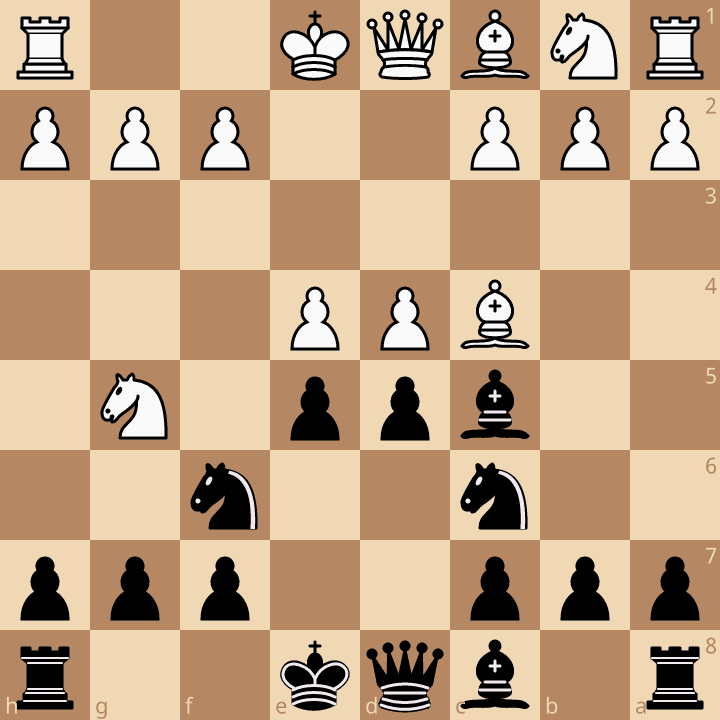
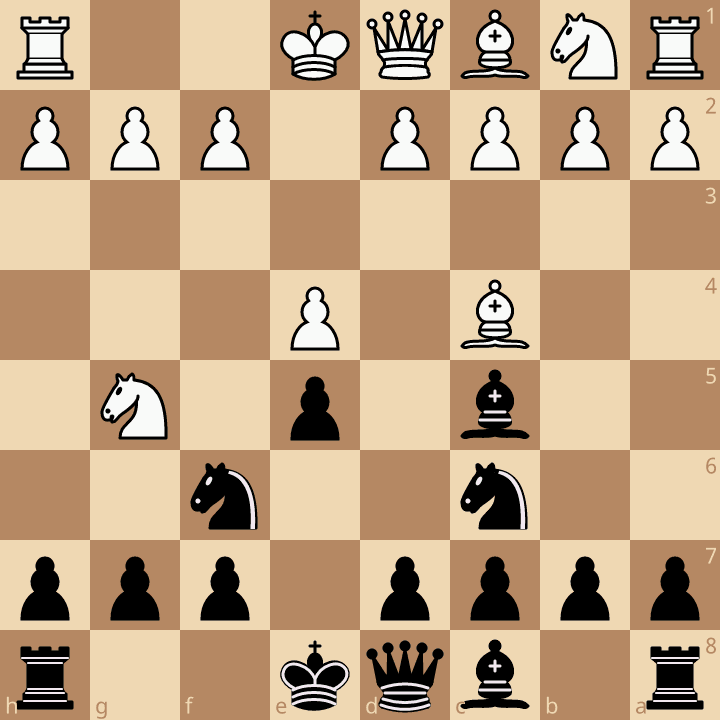
1.e4 e5 2.Nf3 Nc6 3.Bc4 Nf6 4.Ng5 Bc5

Contraataque Traxler: posición inicial tras 1.e4 e5 2.Nf3 Nc6 3.Bc4 Nf6 4.Ng5 Bc5

¿Qué es Contraataque Traxler?

El Contraataque Traxler, también llamado Variante Wilkes-Barre, surge tras 1.e4 e5 2.Cf3 Cc6 3.Ac4 Cf6 4.Cg5, la jugada de caballo que prepara el Ataque Fegatello. En lugar de defender f7 con 4...d5, las negras juegan 4...Ac5 y dejan que las blancas tomen en f7, para que el alfil golpee en f2 y los caballos persigan al rey blanco. Lleva el nombre de Karel Traxler, sacerdote y compositor de problemas checo, que la jugó en 1890. Las posiciones son forzadas y tácticas: una sola jugada de rey imprecisa decide la partida para cualquiera de los dos bandos. Los módulos prefieren a las blancas, sobre todo por el tranquilo 5.Axf7+ y no por el codicioso 5.Cxf7, y 4...d5 es la respuesta más sólida a 4.Cg5. El Traxler es un arma práctica que funciona cuando conoces sus líneas mejor que tu rival.

Variaciones principales

Cada variación incluye un diagrama y el plan principal. Haga clic en «Entrene esta apertura» para trabajar cada línea con repetición espaciada.

¿Quiere repasar Contraataque Traxler de memoria? Practique sus aperturas jugada a jugada en el entrenador gratuito y vuelva luego a las variantes que falló.

Main line: 5.Nxf7 Bxf2+ 6.Kxf2 Nxe4+

1.e4 e5 2.Nf3 Nc6 3.Bc4 Nf6 4.Ng5 Bc5 5.Nxf7 Bxf2+ 6.Kxf2 Nxe4+
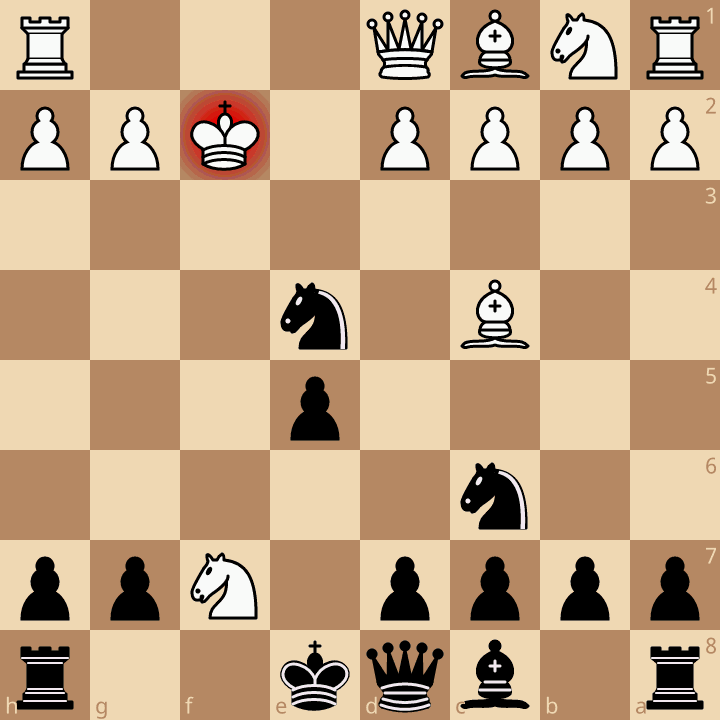
Contraataque Traxler Main line: 5.Nxf7 Bxf2+ 6.Kxf2 Nxe4+ tras 5.Nxf7 Bxf2+ 6.Kxf2 Nxe4+
Línea principal: 7.Kg1 Qh4 8.g3 Nxg3 9.hxg3 Qxg3+ 10.Kf1 Rf8

White accepts everything: the knight forks queen and rook on f7, the king takes the bishop, and 6...Nxe4+ drags it into the open. 7.Kg1 is the main reply (7.Ke3 is the other serious try). White is up material, but the king has no shelter, and with best play engines rate the line as roughly balanced, with perpetual check a frequent outcome.
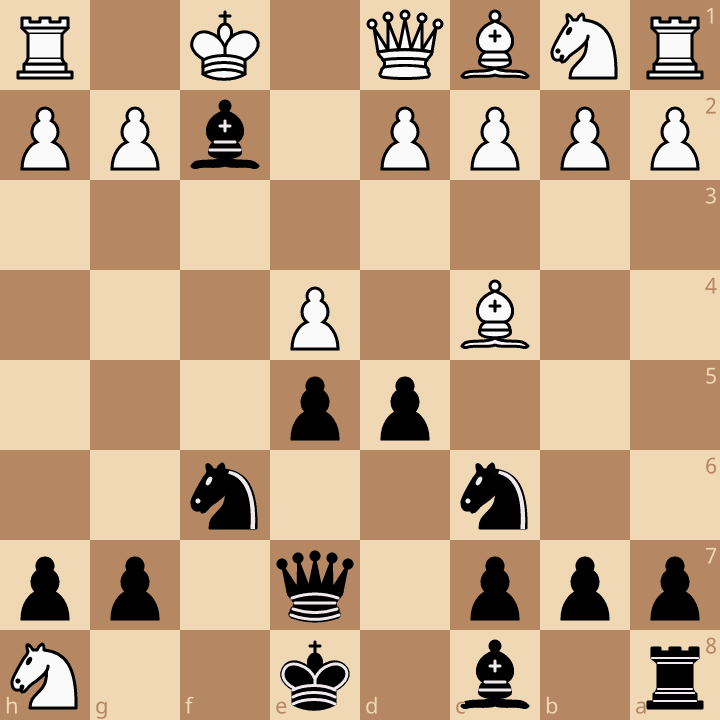
6.Kf1: keeping the knight

1.e4 e5 2.Nf3 Nc6 3.Bc4 Nf6 4.Ng5 Bc5 5.Nxf7 Bxf2+ 6.Kf1 Qe7 7.Nxh8 d5

Contraataque Traxler 6.Kf1: keeping the knight tras 5.Nxf7 Bxf2+ 6.Kf1 Qe7 7.Nxh8 d5
Línea principal: 8.exd5 Nd4

White declines the bishop and steps aside with 6.Kf1, then takes the rook. Black is a rook down but White's king and the h8 knight are stranded, and 7...d5 opens lines; 8.exd5 Nd4 brings another piece into the attack. Both sides need concrete knowledge here, and engines see it as close to balanced.

5.Bxf7+: the engine's choice

1.e4 e5 2.Nf3 Nc6 3.Bc4 Nf6 4.Ng5 Bc5 5.Bxf7+ Ke7

Contraataque Traxler 5.Bxf7+: the engine's choice tras 5.Bxf7+ Ke7
Línea principal: 6.Bc4 Rf8 7.Nc3

The cold-blooded answer, and the main reason engines don't trust 4...Bc5. White takes the pawn with check and forces the king to e7 without giving Black the f2 counterattack. Black gets the half-open f-file and quick development (...Rf8, ...d6, sometimes ...Qe8), but White keeps the extra pawn and a clear edge. 6.Bb3 and 6.Bd5 are also played.

5.d4: opening the centre

1.e4 e5 2.Nf3 Nc6 3.Bc4 Nf6 4.Ng5 Bc5 5.d4 d5

Contraataque Traxler 5.d4: opening the centre tras 5.d4 d5
Línea principal: 6.Bxd5 Nxd4

A rarer try: White strikes in the centre before taking anything. 5...d5 is Black's best counter, and after 6.Bxd5 Nxd4 the game stays tactical, with Bxf7+ still in the air. Less forcing than 5.Nxf7; engines keep a modest edge for White.

Trampas habituales

Observe cómo se desarrolla la trampa en el tablero o recórrala movimiento a movimiento. Son patrones que puede castigar en sus propias partidas.

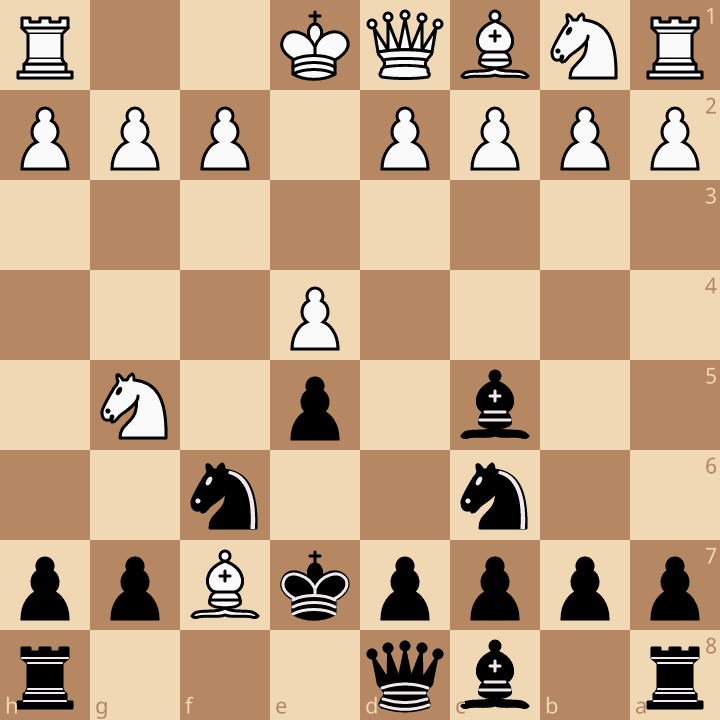
7.Kf1? Qh4! and Qf2 mate

After 6.Kxf2 Nxe4+, the natural-looking 7.Kf1? walks into 7...Qh4!, and grabbing the rook with 8.Nxh8?? allows 8...Qf2 mate, the queen protected by the e4 knight. Even without that blunder, engines rate 7.Kf1 as clearly better for Black.

1.e4 e5 2.Nf3 Nc6 3.Bc4 Nf6 4.Ng5 Bc5 5.Nxf7 Bxf2+ 6.Kxf2 Nxe4+ 7.Kf1 Qh4 8.Nxh8 Qf2#

0/16

Start position

6.Ke2? Nd4+

Stepping to e2 to avoid the bishop is a common club mistake. 6...Nd4+ gains time on the king: after 7.Kxf2 Nxe4+ or 7.Kd3 Qe7, White's king is caught in the centre and engines give Black a decisive advantage.

1.e4 e5 2.Nf3 Nc6 3.Bc4 Nf6 4.Ng5 Bc5 5.Nxf7 Bxf2+ 6.Ke2 Nd4+

0/12

Start position

¿Hasta dónde conviene estudiarla?

Below 1400

Learn the 5.Nxf7 Bxf2+ lines and the two traps: most opponents at this level take on f7 with the knight and walk into the attack. Know that 5.Bxf7+ exists so it doesn't catch you off guard.

1400–1800

Drill the king moves after 6.Kxf2 Nxe4+ (7.Kg1, 7.Ke3, 7.Kf1?) and the 6.Kf1 line, where one wrong check lets the attack fizzle out. Have a plan against 5.Bxf7+ Ke7: ...Rf8, ...d6 and fast development.

1800+

Treat it as a surprise weapon, not a main defense. Prepared opponents answer 5.Bxf7+ and keep a lasting edge; 4...d5 5.exd5 Na5 is the sounder main line against 4.Ng5.

Preguntas frecuentes

Is the Traxler Counter Attack sound?

Objectively it is risky. Engines give White a clear advantage after 5.Bxf7+ Ke7, while the famous 5.Nxf7 Bxf2+ lines tend to end in dynamic balance or perpetual check with best play. 4...d5 is the more reliable answer to 4.Ng5. The Traxler is a practical weapon, strongest against opponents who don't know the lines.

What is the difference between the Traxler and the Fried Liver?

Both arise after 1.e4 e5 2.Nf3 Nc6 3.Bc4 Nf6 4.Ng5. In the Fried Liver, Black plays 4...d5 5.exd5 Nxd5?! and White sacrifices a knight with 6.Nxf7. In the Traxler, Black plays 4...Bc5 and gives up f7 to counterattack f2 and White's king. Our Fried Liver Attack page covers the 4...d5 lines.

What should White play against 4...Bc5?

5.Bxf7+ Ke7 is the engine's choice: White wins a pawn, displaces the king and avoids most of the complications. 5.Nxf7 Bxf2+ is the critical but double-edged try, where 6.Kf1 and 6.Kxf2 Nxe4+ 7.Kg1 or 7.Ke3 must be known precisely. 5.d4 d5 is a less common alternative.

Why is it also called the Wilkes-Barre Variation?

Players from the chess club of Wilkes-Barre, Pennsylvania, analysed it and made it popular in the United States, so American books use that name. Elsewhere it is named after Karel Traxler, who played it in 1890.

How do I memorise the Traxler lines?

The lines are forcing, so precision matters more than understanding: you need the exact king move, check and capture. Spaced repetition suits that well. ChessAtlas brings each line back just before you would forget it, so 7.Kg1, 7.Ke3 and 6.Kf1 stay sharp for the day an opponent plays 4.Ng5.

¿Listo para entrenar Contraataque Traxler?

Cada variación de arriba es un ejercicio en ChessAtlas. La repetición espaciada programa cada movimiento para que nunca olvide una línea. Gratis para empezar, sin tarjeta de crédito.