Chess Opening Trainer
Practice your opening repertoire with spaced repetition - until every line is automatic. Instant feedback, your own lines, real progress tracking.
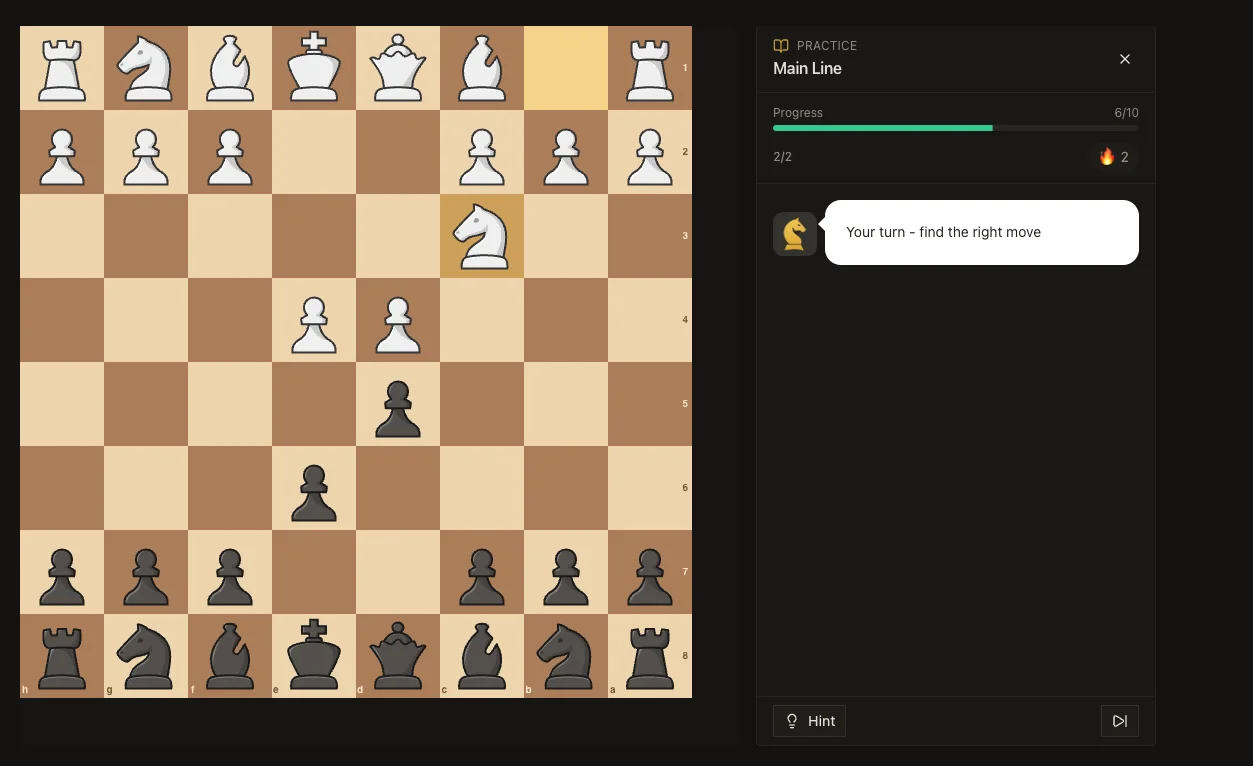
3x
Better retention
100%
Coverage
∞
Training modes
📊
Progress tracking
How Training Works
Our trainer presents you with positions from your repertoire and asks you to find the right move. It's like having a coach who never gets tired:
Instant Feedback
Know immediately if your move is correct. Wrong answers show the right continuation so you learn from mistakes.
Adaptive Difficulty
Focus on lines you struggle with. The system automatically prioritizes variations where you need more practice.
Multiple Training Modes
Practice specific chapters, review due cards, or drill your entire repertoire. Train the way that works for you.
Progress Statistics
Track your accuracy, streaks, and improvement over time. See exactly where you're strong and where you need work.
Position Focus
Target specific positions that give you trouble. The trainer helps you master difficult variations.
Spaced Review
Integrated with spaced repetition so you review positions at the optimal time for long-term retention.
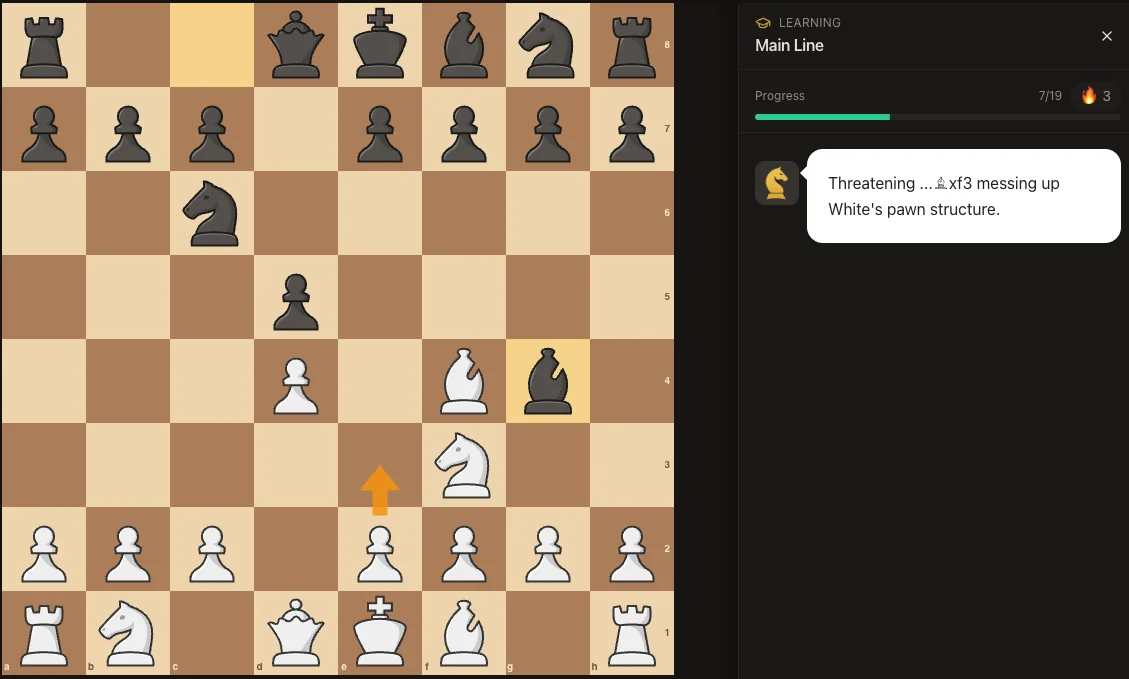
Benefits of Active Recall
Passive review (just reading moves) doesn't build lasting memory. Active recall, being tested and retrieving the answer, is proven to be far more effective:
The Science of Active Recall
Research shows that the act of retrieving information strengthens neural pathways far more than passive review. When you practice finding the right move, you're building the same mental patterns you'll use in real games.
Frequently Asked Questions
What is active recall in chess training?
Active recall is a learning technique where you actively test yourself rather than passively reviewing material. In chess opening training, this means playing out moves from memory instead of just reading through variations, which strengthens neural pathways and dramatically improves retention.
How do I train chess openings effectively?
The most effective way to train chess openings is through active recall combined with spaced repetition. Build your repertoire, then practice by playing moves against the computer. Focus on understanding the ideas behind each move, not just memorizing sequences.
What is the difference between reading and training openings?
Reading openings is passive study where you review variations without testing yourself. Training openings is active practice where you play moves from memory. Research shows active training improves retention by 3x compared to passive reading.
How does ChessAtlas opening trainer work?
ChessAtlas presents you with positions from your repertoire and asks you to play the correct move. The system tracks your accuracy, schedules reviews using spaced repetition (FSRS algorithm), and shows detailed statistics so you know exactly which lines need more practice.
Can I customize my training sessions?
Yes, ChessAtlas offers multiple training modes including training by chapter, focusing on weak spots, or reviewing due cards. You can adjust settings like move validation strictness, hints, and whether to show the evaluation bar during practice.
Explore Related Features
Spaced Repetition
Memorize openings efficiently with the scientifically-proven FSRS algorithm.
Repertoire Builder
Create and organize your complete opening system with our intuitive builder.
Deviation Finder
Find where you deviated from your preparation in your actual games.
Further reading
What to Look for in a Chess Opening Trainer: 2026 Buyer’s Guide
How to compare SRS algorithms, game import, deviation detection, and pricing.
How to Memorize Chess Openings (and Actually Remember Them)
Why brute-force memorisation fails, and what works instead.
Spaced Repetition for Chess Openings: The Complete FSRS Guide
The active-recall science behind why SRS beats rote review for chess.
Start Training Today
Turn your repertoire knowledge into automatic responses. Practice makes permanent.