Advance Variation
1.e4 c6 2.d4 d5 3.e5
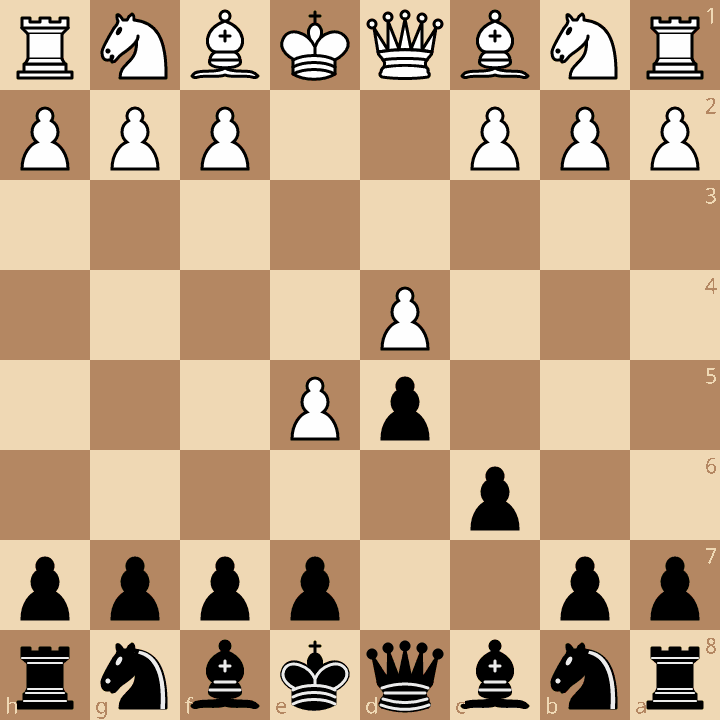
White claims space with e5. Black's modern recipe: 3...c5 attacking d4 immediately, then ...Nc6...Bg4 (pinning the f3 knight), and ...e6 to solidify.
A defesa sólida a 1.e4 onde o bispo das casas brancas consegue trabalho real.
1.e4 c6 2.d4 d5
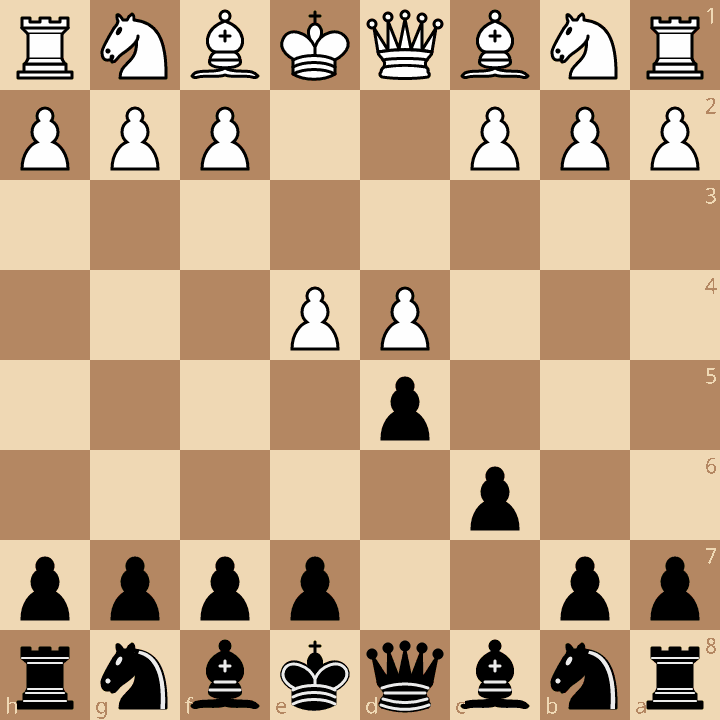
A Caro-Kann prepara 2...d5 com 1...c6, monta o mesmo ataque contra e4 que a Francesa mas sem fechar o bispo das casas brancas atrás do peão de e6. Contra a Variante de Avanço (3.e5), as pretas jogam imediatamente ...Bf5 e obtêm um bispo activo fora da cadeia de peões, uma clara vantagem estratégica sobre a Francesa. O resultado: menos linhas cortantes do que a Siciliana, menos espaço cedido do que na Pirc e uma estrutura de peões sempre reparável. Nomeada a partir de Horatio Caro e Marcus Kann (1886), foi a arma de Capablanca, Petrosian, Karpov e, mais recentemente, Firouzja e Ding Liren.
Cada variação abaixo vem com um diagrama e o plano principal. Clique em «Treine esta abertura» para praticar cada linha com repetição espaçada.
Quer repassar Defesa Caro-Kann de memória? Pratique as suas aberturas lance a lance no treinador gratuito e volte depois às variações que errou.
1.e4 c6 2.d4 d5 3.e5
White claims space with e5. Black's modern recipe: 3...c5 attacking d4 immediately, then ...Nc6...Bg4 (pinning the f3 knight), and ...e6 to solidify.
1.e4 c6 2.d4 d5 3.Nc3 dxe4 4.Nxe4 Bf5
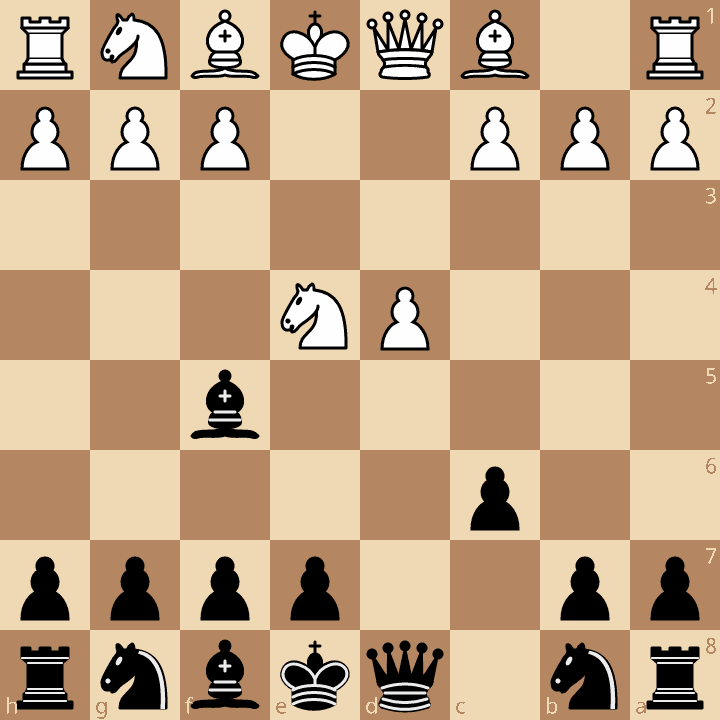
The most principled line. Black develops the bishop actively before ...e6 traps it. After 5.Ng3 Bg6 6.h4 h6 7.Nf3, Black has a solid, well-coordinated position.
1.e4 c6 2.d4 d5 3.Nc3 dxe4 4.Nxe4 Nd7
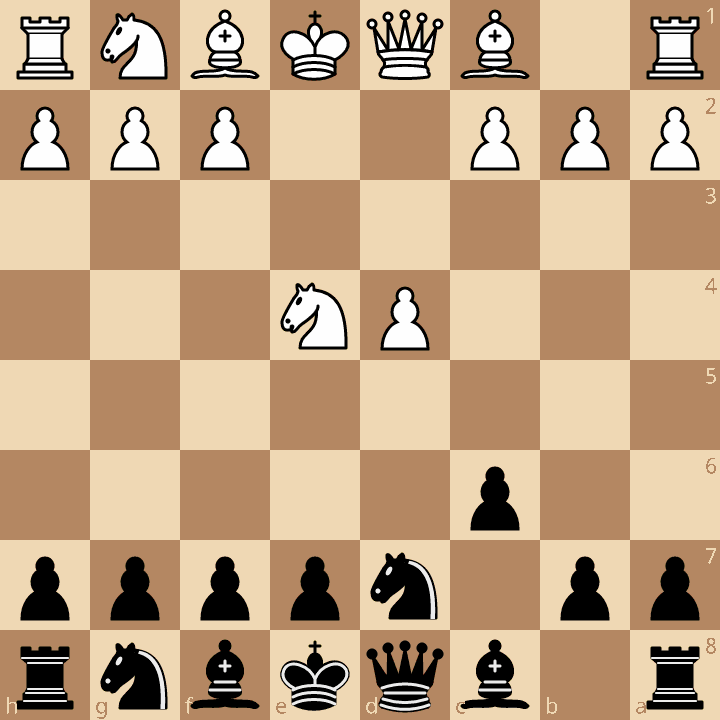
Black delays the bishop development for flexibility. Typical plan: ...Ngf6...e6...Bd6...Qc7, and eventually ...e5. Karpov's lifetime favorite.
1.e4 c6 2.d4 d5 3.exd5 cxd5
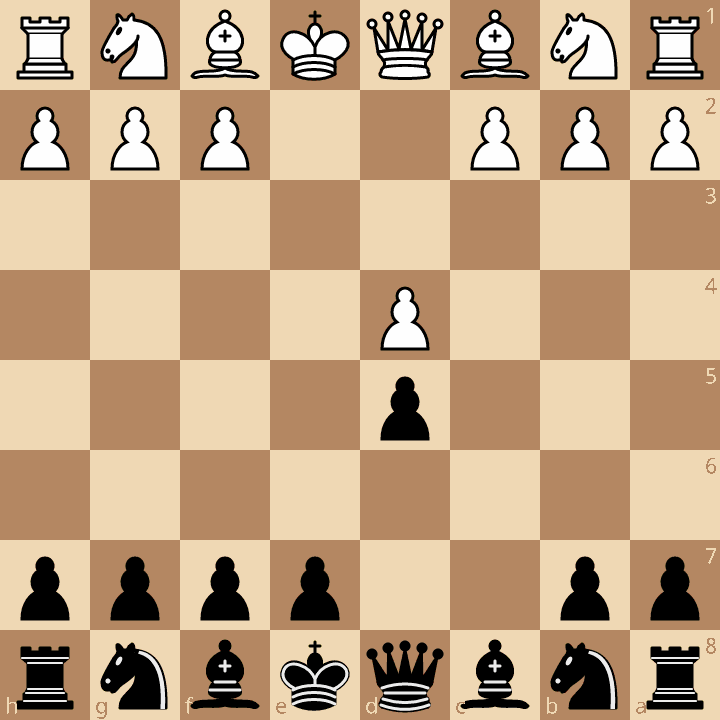
Leads to symmetric pawn structure. Black develops with ...Nc6...Nf6...Bf5, and pressure on the c-file after ...Rc8. Looks drawish but rewards active play.
1.e4 c6 2.d4 d5 3.exd5 cxd5 4.c4
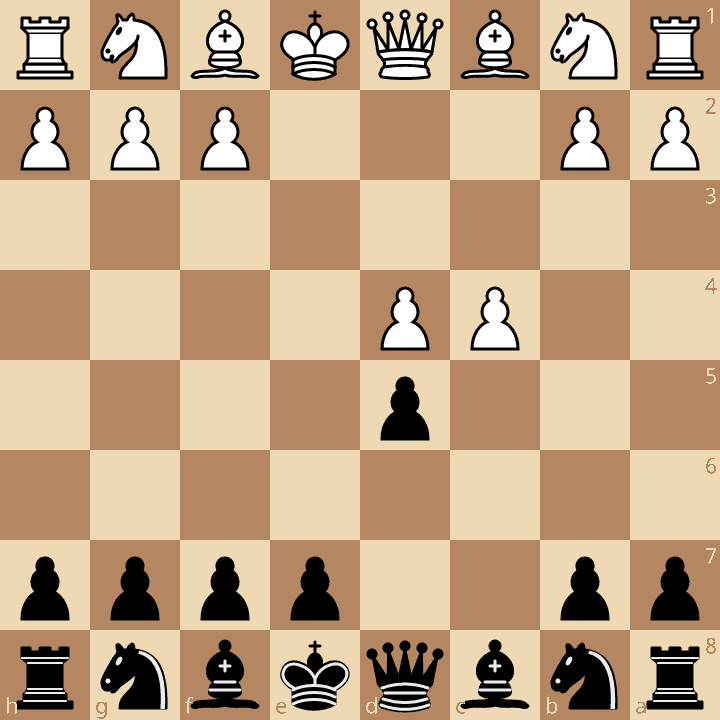
White transposes to an Isolated Queen's Pawn (IQP) game after 4...Nf6 5.Nc3 e6 6.Nf3. Sharper than the normal Exchange, with IQP dynamics.
Observe a armadilha acontecer no tabuleiro ou avance lance a lance. São padrões que você pode punir nas suas próprias partidas.
Against the Fantasy (3.f3), Black first trades on e4 with ...dxe4 so White's f-pawn recaptures. Only then does ...e5 5.dxe5 Qh4+ 6.g3 Qxe4+ work, winning the e4 pawn with check — the f-pawn is no longer there to defend. Skipping the 3...dxe4 preparation hangs the queen to fxe4.
1.e4 c6 2.d4 d5 3.f3 dxe4 4.fxe4 e5 5.dxe5 Qh4+ 6.g3 Qxe4+
Start position
In the Advance Variation, just remember to play ...c5 on move 3 and attack d4. That single plan is the most common White response, so the same idea repeats across most of your games.
Pick one system against 3.Nc3: Classical (4...Bf5) for active play, or Karpov (4...Nd7) for solid maneuvering.
Learn the Panov-Botvinnik (IQP theory) and the Fantasy Variation counters. Study top-level Caro-Kann games from Karpov, Firouzja, and Ding Liren.
Yes, the Caro-Kann is one of the most beginner-friendly defenses against 1.e4. Black's piece development is natural (the c8 bishop goes to f5 or g4 easily), and the plans repeat across variations. Lower theory load than the Sicilian or French.
No. While the structures are solid, the games are rich with targeted breaks (...c5...e5), piece reroutes, and precise middlegame play. The Classical and Advance lines both lead to decisive games more often than you'd expect from a 'solid' opening.
Both play ...d5 against e4 with a similar structural idea, but the Caro-Kann keeps the c8 bishop free to develop outside the pawn chain (usually to f5 or g4), while the French accepts a "bad bishop" on c8 in exchange for more central flexibility. Caro-Kann = less structural pain, more predictable plans.
The modern answer is 3...c5, attacking d4 immediately. After 4.c3 Nc6 5.Nf3 Bg4, Black pins the knight and targets the d4 base. Much more active than the older 3...Bf5, which can lead to cramped positions after 4.Nf3 and h4-h5.
Yes. Anatoly Karpov made it his lifelong defense to 1.e4 (including in the 1996 and 1998 World Championship matches), and today players like Alireza Firouzja, Ding Liren, and Vladislav Artemiev play it regularly at the top. The Caro-Kann is considered one of the most reliable defenses to 1.e4 in modern elite chess.
Uma resposta sólida e estratégica a 1.e4 com um plano de jogo claro.
A resposta combativa a 1.e4 que dá às pretas reais hipóteses de ganho desde o primeiro lance.
Uma defesa directa a 1.e4 com carga teórica mínima, ideal para clubes.
Cada variação acima é um exercício no ChessAtlas. A repetição espaçada programa cada lance para que você nunca mais esqueça uma linha. Grátis para começar, sem cartão de crédito.