King's Gambit Accepted (KGA)
1.e4 e5 2.f4 2...exf4
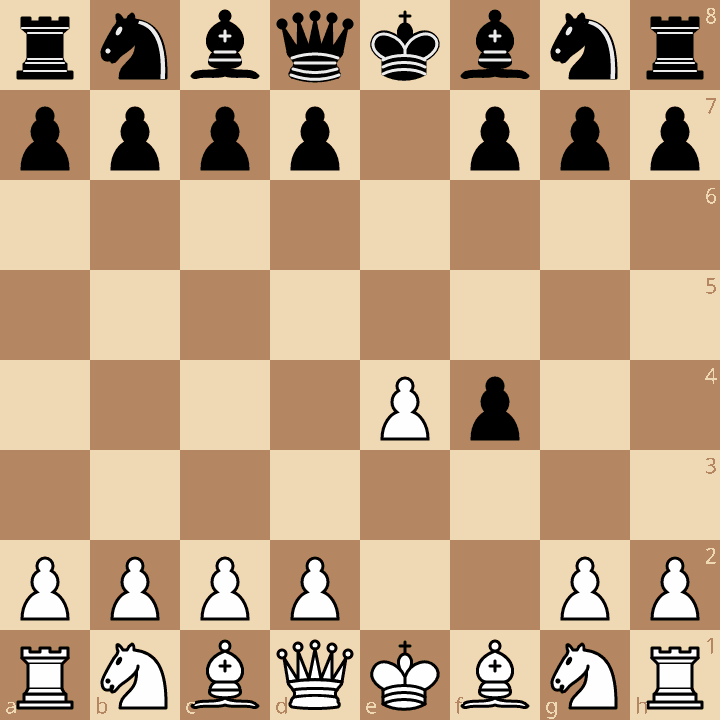
Black takes the pawn. White plays 3.Nf3 (most common) or 3.Bc4 (Bishop Gambit) for rapid development. After 3.Nf3 g5 (classical KGA), White sacrifices more material with h4 or Nc3.
The romantic gambit. Sacrifice a pawn for the ultimate attacking chess.
1.e4 e5 2.f4
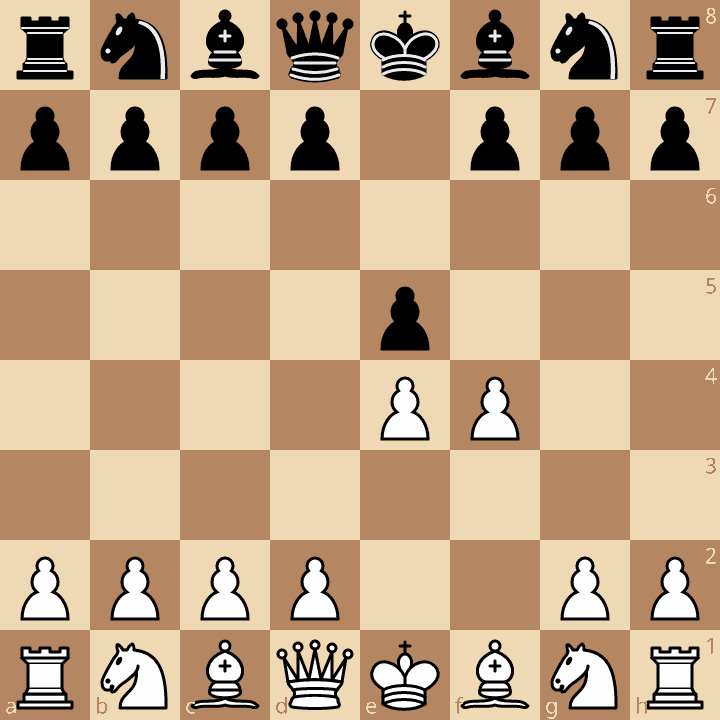
The King's Gambit (1.e4 e5 2.f4) is chess's most famous romantic opening. White sacrifices the f-pawn to open the f-file, seize the center with d4, and launch an all-out attack on Black's king. Morphy, Anderssen, and Spassky (who used it against Fischer) made it famous. Modern theory shows the gambit is slightly unsound against best play, but at club level and in rapid/blitz it's still a terrifying weapon. If you love attacking chess and don't mind giving up a pawn, the King's Gambit is pure joy.
Each variation below comes with a diagram and the main plan. Click "Train this opening" to drill every line with spaced repetition.
1.e4 e5 2.f4 2...exf4
Black takes the pawn. White plays 3.Nf3 (most common) or 3.Bc4 (Bishop Gambit) for rapid development. After 3.Nf3 g5 (classical KGA), White sacrifices more material with h4 or Nc3.
1.e4 e5 2.f4 2...d5
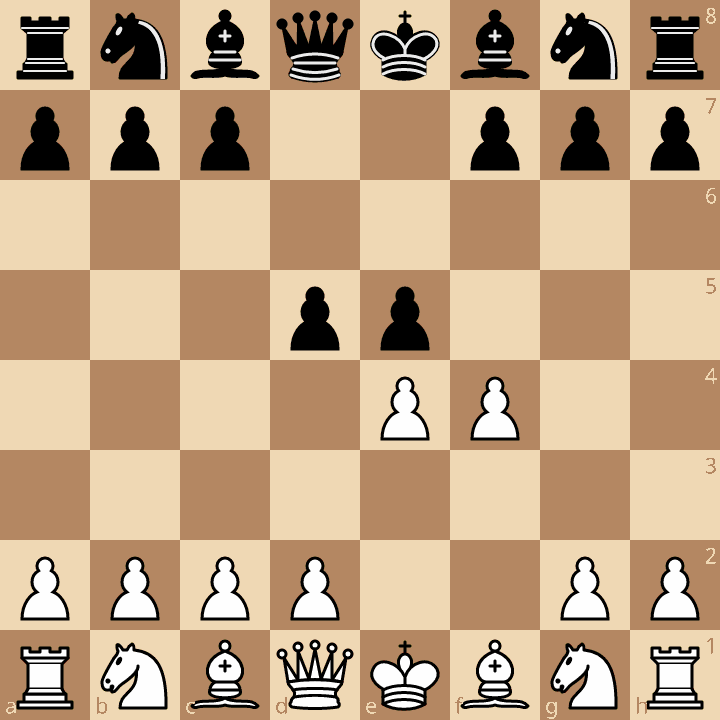
Black counter-gambits instead of accepting. After 3.exd5 e4, Black stakes a claim in the center and attacks White's uncoordinated pieces.
1.e4 e5 2.f4 2...Bc5
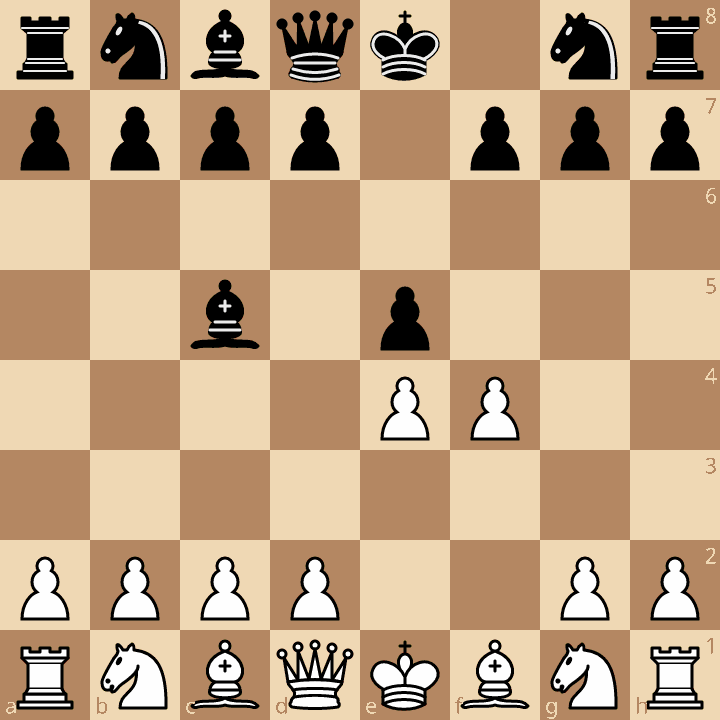
Black refuses the gambit and develops normally. After 3.Nf3 d6 4.Nc3 (or 4.c3), a quieter game ensues with White retaining a slight edge.
Play the King's Gambit! At club level it wins games, most opponents don't know how to defend accurately.
Focus on 3.Nf3 main lines. Study the Muzio Gambit (3.Nf3 g5 4.Bc4 g4 5.O-O!?) for an extreme attacking weapon.
At this level, strong players know the defenses. Use it as a surprise weapon in rapid/blitz, not as a main classical choice.
Against best play, modern engines give Black a small edge. But 'sound' at the top level doesn't mean much at club level, the gambit remains extremely dangerous for players under 2000 ELO.
Two main options: accept with 2...exf4 (classical) or counter-attack with 2...d5 (Falkbeer). Both are fully playable. Accepting requires knowing the defensive ...g5 and ...Bg7 lines; declining with 2...Bc5 is safer but passive.
Rarely in classical chess today, Ian Nepomniachtchi and Hikaru Nakamura have used it in online blitz. Spassky played it against Fischer in 1960 and won. Historically Morphy, Anderssen, and Steinitz employed it regularly.
The King's Gambit Accepted with 3.Nf3 is most principled, White develops rapidly and plans Bc4, Nc3, and castling kingside (or queenside for a storm). Against 2...d5, play 3.exd5 and develop naturally.
Not recommended. The gambit requires precise calculation, understanding of attacking principles, and comfort with sacrificial play. Beginners should learn the Italian Game first, then add the King's Gambit as a surprise weapon once their tactical vision is strong.
A flexible, aggressive alternative to the Italian and Ruy Lopez with the Vienna Gambit attack.
The fastest-developing 1.e4 opening. Aim the bishop at f7 and play for the attack.
Kasparov's revived gambit. Sacrifice a pawn for development and a crushing center.
Every variation above is a drill on ChessAtlas. Spaced repetition schedules each move so you never forget a line again. Free to start — no credit card.