
The King's Indian Defense: The Aggressive Black Repertoire Against 1.d4

Disclosure: ChessAtlas is our product. This is a Black-perspective guide to the King's Indian Defense; it works with any platform. Readers should weigh the perspective accordingly.
The King's Indian Defense (1.d4 Nf6 2.c4 g6) is one of Black's most combative answers to 1.d4. Black invites White to build a large center (c4, d4, e4), then undermines it with ...e5 or ...c5 while launching a kingside pawn storm with ...f5-f4, ...g5-g4. Bobby Fischer used it throughout his career, and Garry Kasparov relied on it during his World Championship years (Wikipedia). Radjabov and Nakamura still play it regularly today. If you want to play for a win as Black against 1.d4, the KID is among the sharpest available weapons.
For the companion White-perspective guide, see How to Beat the King's Indian Defense. For variations and traps, see our King's Indian Defense landing page.
The Core Idea
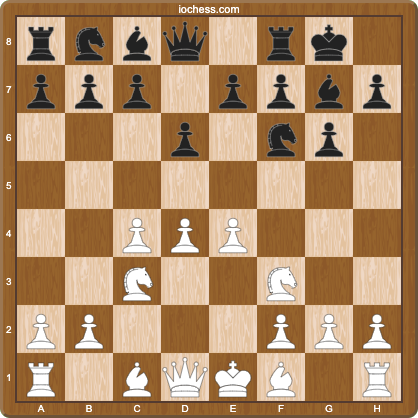
Black's strategic bet: accept a worse position until move 10, then out-attack White with a faster kingside storm. The g7-bishop controls the long diagonal and supports the pawn push. The f5-pawn becomes a missile aimed at White's king. Opposite-wings attacks decide the game, whoever lands first wins.
Main Variations
Classical Mar del Plata (most ambitious)
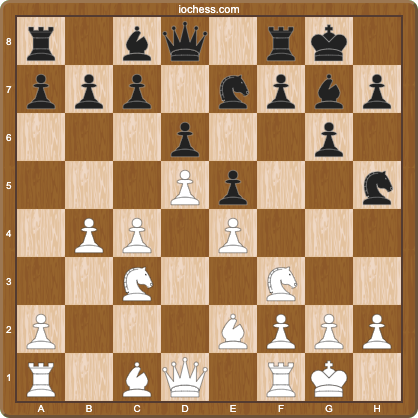
Main line: 5.Nf3 O-O 6.Be2 e5 7.O-O Nc6 8.d5 Ne7 9.b4 (Bayonet) or 9.Ne1 (Classical retreat). Black plays ...Nh5, ...f5, ...f4, ...g5-g4-g3 kingside storm with knight sacrifices on h3 or g3.
Heavy theory. At 1600+ ELO, this is the most important variation to learn. Black's defensive resources in the 9.b4 Bayonet Attack run deep; expect to learn 15+ moves in the main line.
Sämisch defense (5.f3 setups)
When White plays 5.f3 (Sämisch), Black has two main plans: ...c5 Benoni-like structures or the slower ...e5 maneuvering. Typical plan: ...c5 6.d5 O-O 7.Nc3 e6 with counterplay on the queenside before White's kingside attack arrives.
Fianchetto defense (against 4.g3 or 5.g3)
Against the Fianchetto Variation, Black plays ...O-O, ...d6, ...Nbd7, ...e5, and maneuvers patiently. Less attacking play but Black equalizes reliably with Kramnik-style positional defense.
Four Pawns Attack defense
When White overextends with 5.f4, Black strikes with ...c5 immediately, accepting the space for active piece play. Black often wins material or gets a winning attack if White's overextended pawns collapse.
Rating-Specific Advice
- Under 1600: do not play the KID yet. The opposite-side attacks and precise move orders exceed what most games at this level can handle. Stick to the QGD or Slav (less theory, forgiving). See our beginner openings guide.
- 1600 to 2000: Mar del Plata main line is the priority. Learn moves 1 to 10 thoroughly, then the 9.b4 Bayonet responses. Study Kasparov's 1990s games.
- 2000+: full coverage including Sämisch, Fianchetto, and Four Pawns. Study Radjabov and Nakamura's modern treatment of the sharp Bayonet lines.
Comparison with Related Black Defenses
| Defense | First moves | Style | Theory load |
|---|---|---|---|
| King's Indian | 1.d4 Nf6 2.c4 g6 + ...Bg7 + ...d6 | Sharp, attacking | Heavy (Mar del Plata) |
| Grünfeld | 1.d4 Nf6 2.c4 g6 + 3...d5 | Counterattack | Very heavy |
| Modern Benoni | 1.d4 Nf6 2.c4 c5 3.d5 e6 | Imbalanced | Moderate |
| Nimzo-Indian | 1.d4 Nf6 2.c4 e6 3.Nc3 Bb4 | Strategic | Heavy |
| Queen's Gambit Declined | 1.d4 d5 2.c4 e6 | Solid, classical | Moderate |
The KID is distinctive for its extreme asymmetric attack dynamic. Other defenses contest the center or seek equality; the KID explicitly plays for opposite-wings attacks.
Common Black Mistakes
Playing ...e5 too early
Timing matters. Playing ...e5 before completing development (...O-O, ...Nc6 or ...Na6) can allow White's d5 push that misplaces Black's pieces. Complete development first, then commit to ...e5.
Missing the ...f5 tempo
After the center locks with ...e5 + d5 + Ne7, Black must play ...f5 quickly. Delaying ...f5 gives White time for c5 + b4-b5 on the queenside. The race is tight.
Underestimating White's queenside speed
Many club-level KID players focus exclusively on the kingside attack and get mated on the queenside by c5+cxd6+Nb5. Defensive resources like ...a5 or ...Rb8+...b6 are essential.
Giving up the g7 bishop too early
Trading the fianchettoed bishop without compensation is a structural disaster. The Bg7 is Black's main attacker against e5 and the long diagonal. Keep it on g7 unless you get concrete compensation.
Historical Context
The King's Indian emerged as a serious opening in the 1940s, developed in large part by Soviet players including David Bronstein, Isaac Boleslavsky, and Efim Geller (Wikipedia). Fischer made it his main Black weapon against 1.d4. Kasparov played it throughout his World Championship reign, including notable wins against Anatoly Karpov in their 1980s matches (Wikipedia). Modern exponents include Radjabov, Nakamura, Mamedyarov, and Anish Giri. At the super-grandmaster classical level the KID has become somewhat less common in recent years, as engine analysis is often seen to favor White's queenside race in the sharpest lines, but it remains fully playable.
Related Articles
- How to Beat the King's Indian Defense (White), companion article from the other side
- Nimzo-Indian Defense, the strategic alternative for Black
- Queen's Gambit complete guide, what your KID opponents will try instead
- How to Build a Chess Opening Repertoire That Actually Sticks
- How deep to study by rating
Your Micro-Action Today
Set up the Classical Mar del Plata: 1.d4 Nf6 2.c4 g6 3.Nc3 Bg7 4.e4 d6 5.Nf3 O-O 6.Be2 e5 7.O-O Nc6 8.d5 Ne7 9.b4 Nh5. Study one Kasparov KID game from this position in a collection of master games. Drill the ...f5-f4 plan tomorrow.
Or create a free ChessAtlas account and drill your KID repertoire with FSRS spaced repetition.
Sources and Further Reading
Last updated: Jun 13, 2026


Comments