
Anti-Sicilian Systems: How to Play Against 1...c5 Without the Open Sicilian

Disclosure: ChessAtlas is our product. This article is a technical deep-dive on Anti-Sicilian systems for White. For the strategic decision of which one to pick, see our companion article on how to beat the Sicilian Defense.
Anti-Sicilian systems are White's replies to 1.e4 c5 that avoid the Open Sicilian (2.Nf3 + 3.d4). They exist for one reason: Black's best Open Sicilian defenses, Najdorf, Dragon, Sveshnikov, Taimanov, Kan, each require substantial preparation to play well. Anti-Sicilians cut that theoretical load by steering the game into one recurring structure, often with White scoring comparably well at club level. For background on the opening as a whole, see the Sicilian Defence overview on Wikipedia.
This article covers each major Anti-Sicilian system with its move orders, strategic themes, and typical tactical patterns. If you want the tournament-ready decision flowchart (which system to pick based on your style), read the companion guide linked above. For Black's perspective see our Sicilian Defense landing page.
The Alapin (2.c3): The Universal Solution
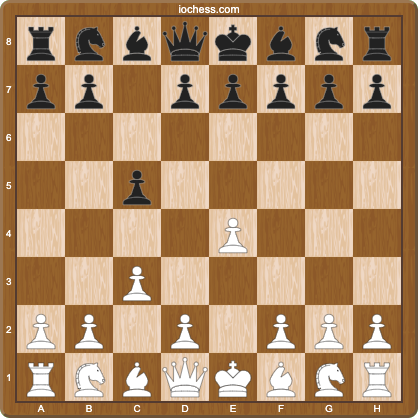
Main Black choices:
- 2...Nf6 3.e5 Nd5 4.d4 cxd4 5.Nf3: the main theoretical battleground. White plays Bd3, O-O, and aims for central piece activity. Black counters with ...e6, ...d6, or ...g6 setups.
- 2...d5 3.exd5 Qxd5 4.d4: Scandinavian-like structures with a White development advantage. Many Sicilian specialists dislike this because it resembles an opening they are unfamiliar with.
- 2...e6 3.d4 d5 4.exd5 exd5: transposes into French-like structures. Comfortable for French players, harder for mainstream Sicilian players.
Strategic themes: White's goal is a strong e4+d4 center with piece activity. Typical piece placements: Bd3 (not Bc4 which misplaces vs ...Nf6), Nf3, O-O, Nbd2 aiming at Nb3 or Nf1-g3, eventually d5 breaks.
Tactical patterns: the Alapin often produces IQP positions after Black plays ...cxd4. White's typical tactics include Bxh7+ sacrifices when Black castles into a kingside attack, and Ne5 outposts that support f4-f5 breaks.
Why it works: The Alapin avoids most Sicilian specialists' home preparation. Sveshnikov, Najdorf, and Dragon theory simply does not apply after 2.c3. The opening rewards understanding of French/Scandinavian-like pawn structures rather than deep memorization. The variation is named after Semyon Alapin (Wikipedia).
The Rossolimo (2.Nf3 Nc6 3.Bb5)
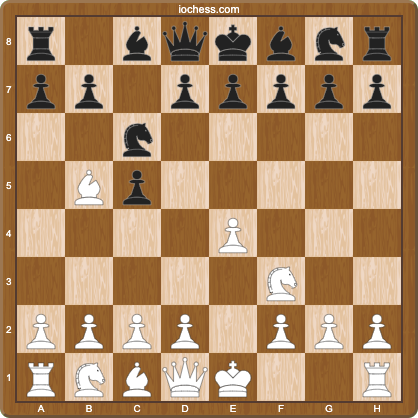
Main Black choices:
- 3...g6: most common. Black plans ...Bg7 and ...d6. White responds 4.Bxc6 bxc6 5.O-O Bg7 6.Re1 with structural advantage and the c5 square often passing to a White knight.
- 3...e6: flexible, Black preserves the knight. White plays 4.Bxc6 bxc6 5.d3 with a quieter maneuvering game.
- 3...d6: transposes to Moscow-like positions after 4.O-O or 4.Bxc6+.
- 3...Nf6: accepts doubled pawns after 4.Bxc6 (can also be met with 4.Nc3).
Strategic themes: Black's structure after Bxc6 is the main battlefield. Doubled c-pawns (bxc6 or dxc6) give White long-term endgame chances, a better pawn structure on the queenside, and the outpost c5 / d5.
Tactical patterns: fewer than the Alapin. The Rossolimo is a positional system. Typical motifs include Nc3+Nd5 outposts, Bxf6 ruining Black's kingside, and endgame technique converting structural advantages.
Why it works at top level: Carlsen, Caruana, and Ding all use the Rossolimo regularly in classical games. It scores well because Sicilian specialists rarely have deep Rossolimo preparation, they are prepared for mainline Najdorf or Sveshnikov.
The Grand Prix Attack (2.Nc3 Nc6 3.f4)
Main line: 1.e4 c5 2.Nc3 Nc6 3.f4 g6 4.Nf3 Bg7 5.Bc4 (or 5.Bb5) with a direct kingside attack plan.
Strategic themes: White aims for Qe1-h4, f4-f5 break opening the kingside, and sacrificial attacks on Black's king. Black's best defense involves early ...d5 to contest the center and ...e6+...Nge7 avoiding the Bc4 diagonal.
Tactical patterns: classical kingside attack themes, rook lifts, queen sorties to h4/h5, piece sacrifices on f6 or h6.
Why it works at club level: many Black players respond with natural development (...d6, ...Nf6, ...g6, ...Bg7) without knowing the precise ...d5 break. White's attack arrives before Black organizes defense.
The Closed Sicilian (2.Nc3 with g3)
Main line: 1.e4 c5 2.Nc3 Nc6 3.g3 g6 4.Bg2 Bg7 5.d3 d6 6.f4 (or 6.Be3) with slow fianchetto buildup.
Strategic themes: the quietest Anti-Sicilian. White aims for a kingside attack with f4-f5 and piece maneuvering (Nge2, Qd2, Nd5). Black plays in standard King's Indian style with ...e6 or ...e5 central breaks.
Why it works: avoids all Open Sicilian and Rossolimo theory. Boris Spassky employed it at the World Championship level (Wikipedia). Below 2000, many Sicilian players are unsure how to respond to the slow Closed Sicilian setup.
The Smith-Morra Gambit (2.d4 cxd4 3.c3): Surprise Only
Main line: 1.e4 c5 2.d4 cxd4 3.c3 dxc3 4.Nxc3 with fast development and semi-open c and d files.
Strategic themes: pure attack. White develops to Bc4, Qd2, Be3, O-O-O, then pushes f4 or Rd1+Rhe1 with direct kingside threats.
Honest assessment: theoretically dubious. Black declines with 3...Nf6 or accepts with 3...dxc3 and neutralizes with ...d6+...Nf6+...e6+...a6. Use the Smith-Morra as a one-time surprise in online blitz, not as a main repertoire.
The Moscow Variation (2.Nf3 d6 3.Bb5+)
Main line: 1.e4 c5 2.Nf3 d6 3.Bb5+ with two Black replies:
- 3...Bd7: invites the trade. White plays 4.Bxd7+ Qxd7 5.c4 or 5.O-O with a quiet positional game.
- 3...Nc6: transposes to Rossolimo after 4.O-O.
- 3...Nd7: the most principled reply. White plays 4.d4 or 4.c3 with good chances.
Why it matters: the Moscow is the anti-Najdorf weapon. After 2...d6 (the Najdorf/Classical move order), 3.Bb5+ denies Black the Najdorf entirely. Combines well with the Rossolimo in a complete Anti-Sicilian repertoire (3.Bb5 vs 2...Nc6, 3.Bb5+ vs 2...d6).
Building a Complete Anti-Sicilian Repertoire
Three sensible combinations, by increasing depth:
The Alapin-only repertoire (minimum theory)
2.c3 against any Black Sicilian move. One system handles everything. Ideal for 1200 to 1600 ELO.
The Rossolimo + Moscow + Alapin combination
- vs 2...Nc6: 3.Bb5 Rossolimo
- vs 2...d6: 3.Bb5+ Moscow
- vs 2...e6 or other: 3.c3 Alapin or 3.d4 Taimanov-entry
More complete coverage, requires learning three systems. Good for 1500 to 2000.
The GM repertoire: Open Sicilian + selective Anti-Sicilians
Full Open Sicilian theory (Yugoslav vs Dragon, Richter-Rauzer vs Classical, English Attack vs Najdorf, Maroczy Bind vs Accelerated Dragon), with Rossolimo as a surprise weapon for must-win games or tournament preparation. 2000+ only.
Common Mistakes Against the Sicilian (Even in Anti-Sicilians)
Playing 3.Bc4 (the Bowdler Attack)
1.e4 c5 2.Nf3 Nc6 3.Bc4 misplaces the bishop. Black plays ...e6 and ...d5 with tempo, central expansion, and better development. Use 3.Bb5 or 3.d4 instead.
Mixing move orders carelessly
The Alapin (2.c3), Rossolimo (3.Bb5), and Open Sicilian (3.d4) are distinct. Mixing them (e.g. 2.Nf3 + 3.c3 after ...Nc6) loses coherence and reduces your strategic consistency.
Castling queenside in the Grand Prix without the storm
If you castle long (O-O-O) in Grand Prix setups and Black's ...b5-b4 queenside attack arrives before your kingside f4-f5 break, the White king is in trouble. Commit to the speed race or castle short.
Tools to Drill Your Anti-Sicilian
15 to 20 key positions covering your chosen system. FSRS spaced repetition via ChessAtlas or Chessdriller. For the broader tools landscape see Best Chess Opening Trainers 2026.
Your Micro-Action Today
Pick one Anti-Sicilian system from above. Use the Alapin if you are unsure. Write the first 10 moves in the main variation. Play through a master game in that line. Drill it tomorrow.
For decision-making guidance see How to Beat the Sicilian Defense and How to Build a Chess Opening Repertoire That Actually Sticks. Or create a free ChessAtlas account and drill your Anti-Sicilian from day one.
Sources and Further Reading
Last updated: Jul 24, 2026


Comments